Help! The Romans are coming!
You are here: Home > Cotswold Blog > Help! The Romans are coming!
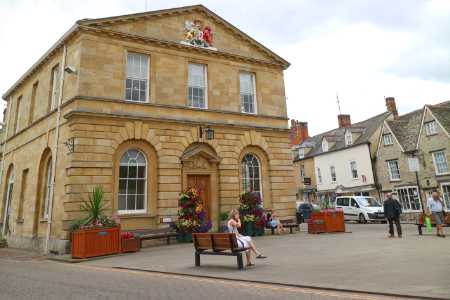
It seems that the Cotswolds were as popular with the Romans as they are with tourists today.
Rome invaded Britain in 43AD and it did not take them long to discover the Cotswolds (although the name Cotswolds is a post-Roman, Anglo-Saxon term).
What? The Romans are staying this time?
Soon after their arrival in the Cotswolds, the Romans were building roads and camps across the area.
One such camp was established to guard an important road junction and a crossing over the River Churn. In 70AD the garrison left the camp and it evolved into the Roman town of Corinium Dobunnorum, in recognition of the Dobunni, the Belgic tribes that had occupied the area before the Roman invasion. Corinium still exists today, although we know it as Cirencester and there is little visible evidence of the Roman town today.
Hints of it can be seen in a short section of the original Roman wall that surrounded the town and a circular grassy mound that is all that remains of an amphitheatre in Cirencester that could have seated up to 80,000 spectators.
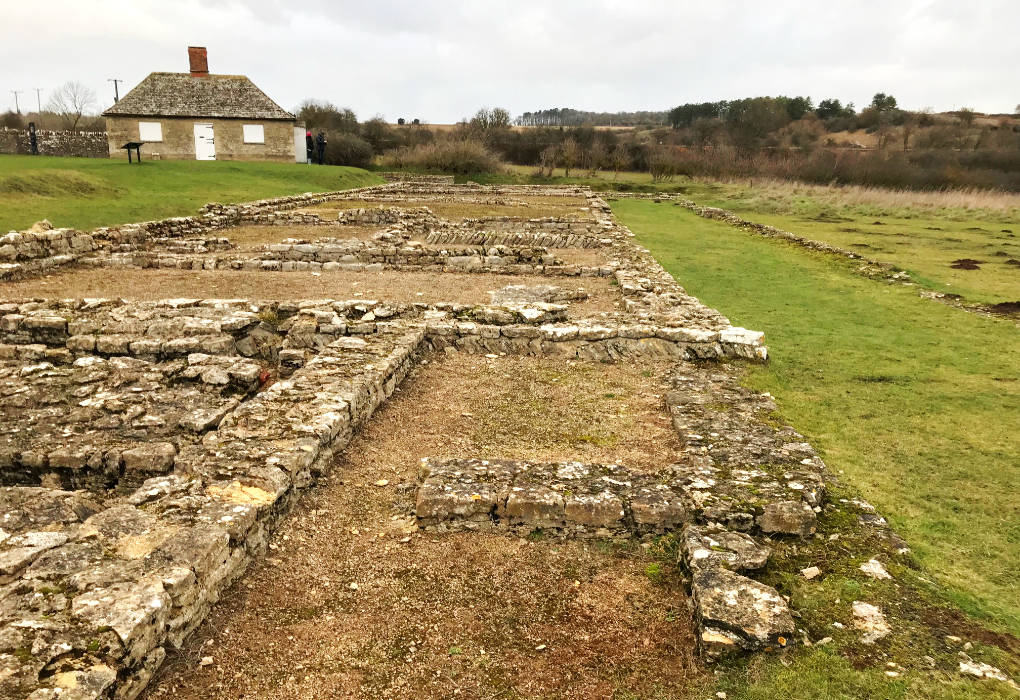
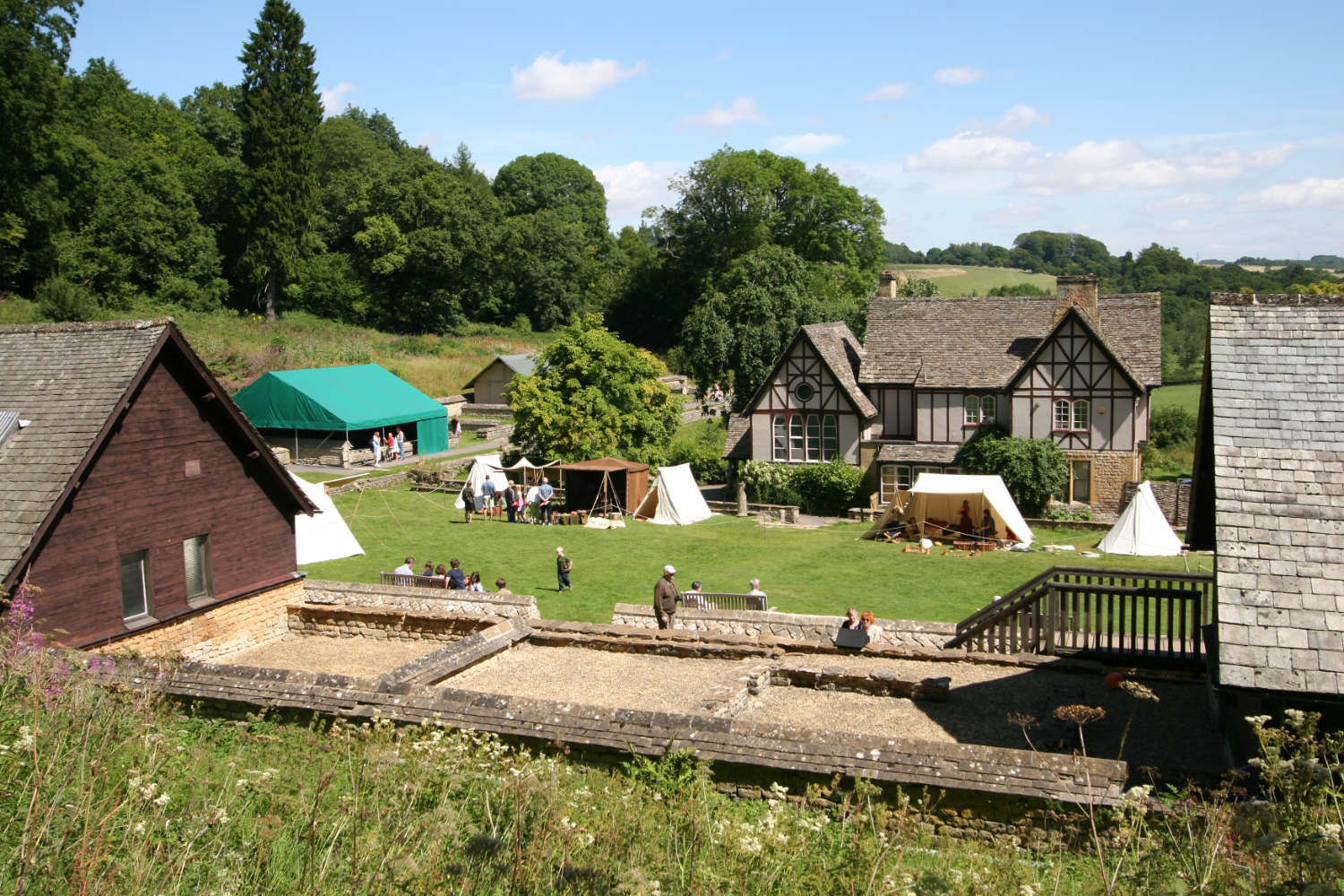
The surrounding landscape suited the Roman idyll of a "pleasurable and leisurely country life" - things don't change - and the Cotswolds has one of the highest concentrations of Villa Rustica (rural manors) in Britain. For example, within 10 miles of the Roman villa at Chedworth (located 10 miles north of Cirencester) there are at least 14 other known villas. Other than Chedworth there are many other famous Roman features in the Cotswolds. These include the towns of Cirencester, Bath and Cheltenham, the villas of Great Witcombe and North Leigh, Roman roads such as the Fosse Way, Akeman Street, Ermine Way and Ryknild Street, and a host of other feathers such as military camps.

What have the Romans ever done for us?
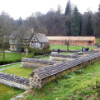
The Villa Rustica that are found in the Cotswolds are particularly impressive, not only by virtue of their numbers, but also by their size and the ostentatious luxury they display. They were the homes of rich and important people and were the centre of gravity of agricultural estates. The money spend on them is exemplified by the mosaic floors, which are beautiful and of very high quality. The scenes include depictions of Bacchus (the Roman god of wine, agriculture and fertility), an indication of the importance of agriculture to those who owned the villas. Rediscovered mosaic floors can be seen at both North Leigh and Chedworth. Further examples of the wealth of the villa's owners are shown at Great Witcombe, a U-shaped villa where the ground floor of one wing was entirely given over to bathing suites. While at Chedworth formally laid out gardens have been discovered.
In the vicinity of the villa, there would have been buildings to house the wider family, buildings to house servants, farm labourers and slaves, and a range of other agricultural building, such as barns and stables.
The products produced on the estates would have been sent across the empire, but would also have supplied the local towns. The Cotswolds town of Corinium Dobunnorum (Cirencester) became the second largest town in Roman Britain. With a population estimated at 10,000 residents, it was surpassed only by London. The town's heyday was in the late 4th century which is also a common theme for the villas including the villas at Chedworth, Great Witcombe and North Leigh.
Help! The Romans are leaving!
Ironically, the heyday of the Roman Cotswolds was the period during which the Roman Empire was itself in decline. During this time, Roman legions were progressively withdrawn from Britain to defend the empire against the increasing threat of invasion along its continental borders.
The last legions left Britain in 408AD and Roman-Britain's commercial link with the rest of the empire declined to such an extent that there was an economic crisis in Britain soon afterwards. It is generally believed that this led to the economic collapse of Britain and it quickly entered what is now known as the Dark Ages. However, recent evidence from Chedworth suggests that the economic decline and the abandonment of the fabulous villas may have been a more gradual process, at least in some parts of the country. Nevertheless, the decline did happen and when, in 577, Cirencester fell to the Saxons the Roman era in the Cotswolds was well and truly over.
Martin Marais
Last updated: 23 August 2023 - Please note: This blog was first written over a year old and things may have changed since the blog was written.