Unveiling the must-visit English Heritage Sites in the Cotswolds
You are here: Home > Cotswold Blog > Unveiling the must-visit English Heritage Sites in the Cotswolds
Hidden within the rolling hills of the Cotswolds lies a world of ancient wonders waiting to be explored. From the haunting ruins of Minster Lovell Hall to the remains of Cirencester Roman Amphitheatre, English Heritage sites offer a glimpse into the rich history and culture that once thrived in this idyllic region.
Whether you're a history buff or simply curious about the past, prepare to be captivated by the stories that echo through these ancient stones and landscapes.
English Heritage, which cares for over 400 historic sites, historic houses and buildings and monuments in England, has many properties in the Cotswolds. Here are some of the best English Heritage sites in the Cotswolds, many of which offer free entry:
Hailes Abbey
Situated amidst the enchanting Cotswold landscape, Hailes Abbey in Gloucestershie was founded in 1246 under the patronage of the Earl of Cornwall. Once an epicenter brimming with monastic vitality, today it stands as a tranquil haven to unwind and savor a delightful picnic within its historic confines. Embark on a journey through time at the newly curated museum, where you can unearth the hidden treasures that encapsulate Hailes' legacy and delve into captivating narratives chronicling centuries-worth of devotion and worship by its resident monks.

Credit: Cotswolds.org
Cirencester Amphitheatre
Located a short walk from Cirencester town centre lies the impressive remnants of a Roman amphitheatre, one of the largest in Britain. Constructed during the early 2nd century, this monumental structure was built when Corinium (now Cirencester) rivaled London in size and significance, boasting a population exceeding 10,000. With a seating capacity for approximately 8,000 spectators, the amphitheatre was later fortified to defend against Saxon invaders once the Roman army departed from Britain.
Cirencester Amphitheatre is managed by Cirencester Town Council.
Credit: Tim Heathfield
Belas Knap Long Barrow
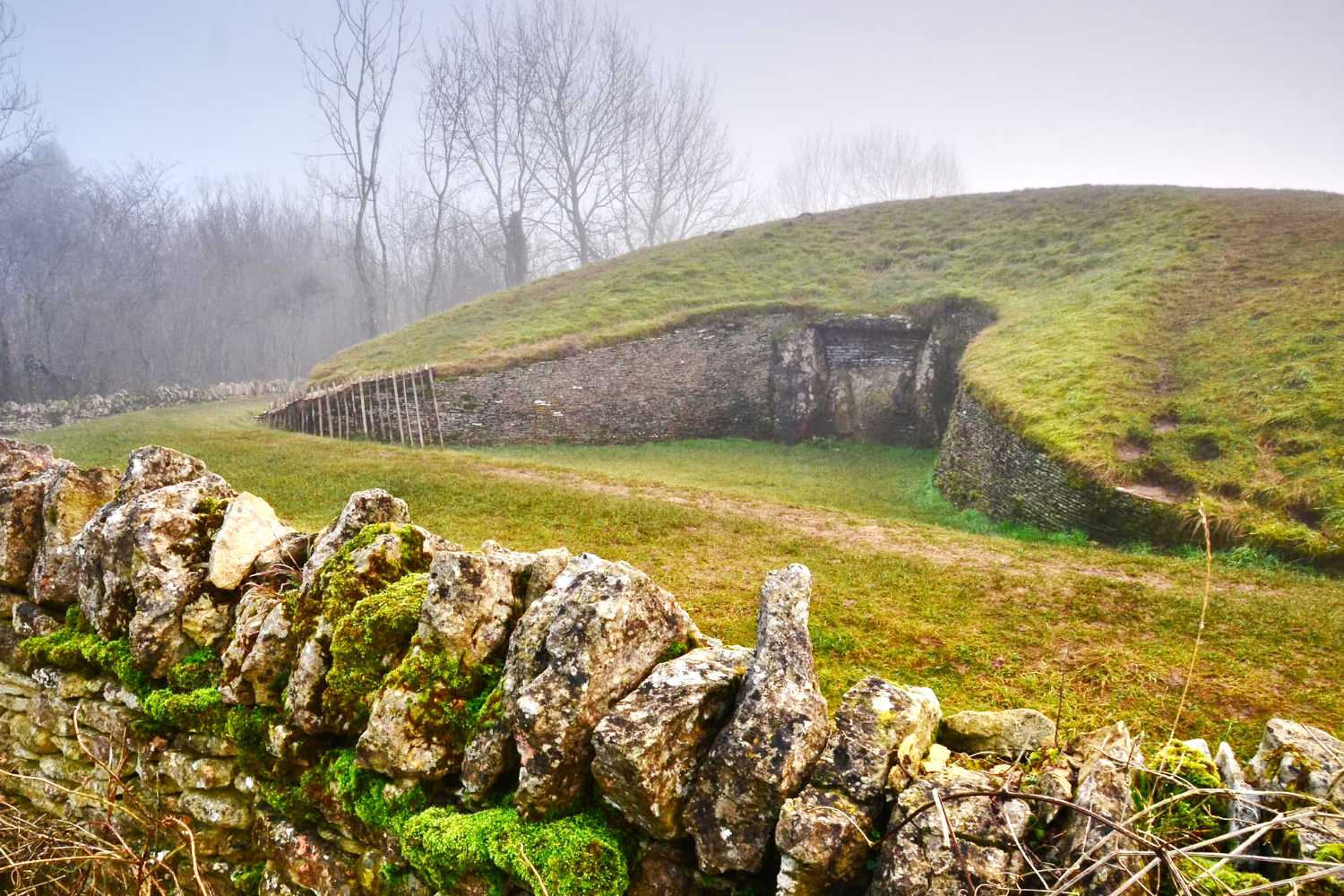
Belas Knap Long Barrow is a mysterious and awe-inspiring ancient burial site located in the heart of the English countryside.
Belas Knap stands out as an exceptional representation of a Neolithic long barrow, featuring a deceptive entrance and chambers on the sides. The excavation carried out in 1863 and 1865 uncovered the remains of 31 individuals within these chambers. Subsequently, efforts were made to restore the barrow.

Credit: Sue McGreal
Rollright Stones
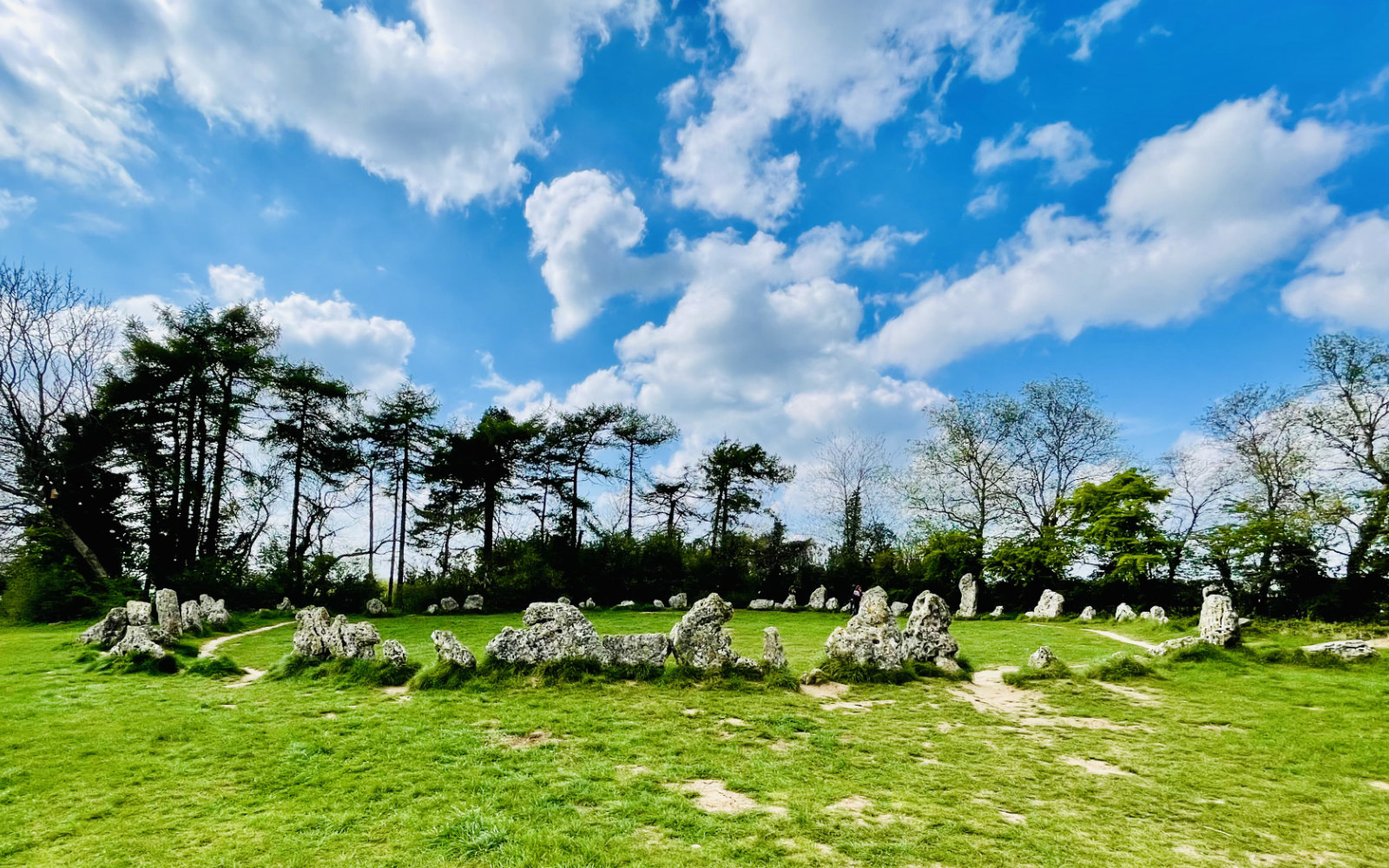
The Rollright Stones comprises a stone circle and standing stones and is one of the most mysterious prehistoric sites in England. Located near the village of Long Compton, on the borders of Oxfordshire and Warwickshire.
The stones can be found on Rollright Road and a lay-by provides parking for several vehicles. From there, a flat path leads to the stone circle. Access to the path is through a kissing gate.
Great Witcombe Roman Villa
Nestled in a serene location near the Cotswold Way, lies the ruins of a grand Roman villa. This magnificent structure, once the centerpiece of a sprawling country estate, was constructed around AD 250 and inhabited until the 5th century. Among its remnants are the remnants of an elaborate bathhouse complex and possibly even a sacred shrine dedicated to a water deity. The preserved mosaic pavements, housed within a contemporary building, offer glimpses into the opulence that once graced this Roman abode. From this vantage point, one can revel in breathtaking vistas of the picturesque countryside.
Minster Lovell Hall and Dovecote
Nestled in the picturesque Oxfordshire countryside, just a stone's throw away from the charming town of Witney, lies the enchanting Minster Lovell Hall and Dovecote. Steeped in history and surrounded by the stunning Cotswolds landscape, this hidden gem offers a captivating glimpse into the past.
The remains of Minster Lovell Hallstand proudly next to the tranquil River Windrush. Visitors can enter the hall from the north, passing through the neighboring churchyard, or take a scenic stroll along the footpath that follows the Windrush valley from the east, which was historically used as an entrance to this enchanting site.
Minster Lovell has been home to a manor house for over 800 years, with the current ruins mainly belonging to a grand residence constructed by William, Baron of Lovell and Holand. Following his victorious return from the French wars in the 1430s, William used his immense wealth, acquired through marriage and fortunate circumstances, to create this extravagant house as a symbol of his affluence.
There are two large fish ponds to the west and south-east of the ruins that provided fresh fish for the household. Additionally, to the north-east of the site, there is a well-preserved 15th-century dovecote, a small circular structure with a conical roof.
Minster Lovell Hall is cared for by English Heritage.
Uley Long Barrow
Uley Long Barrow (Hetty Pegler's Tump) is a Neolithic burial mound is one of the largest (120 feet long) and best-preserved long barrows in England. It is thought to have been built around 3000 BC. 'Hetty Pegler' was its 17th century landowner.
Explore English Heritage sites in the Cotswolds
These are just a few of the many English Heritage sites in the Cotswolds. If you are interested in history, heritage and exploring tranquil countryside be sure to visit one of these sites during your next trip to the Cotswolds.
In addition to these sites, there are many other English Heritage sites in the Cotswolds that are worth visiting including North Leigh Roman Villa, Windmill Tump Long Barrow and Nympsfield Long Barrow.
No matter what your interests are, you are sure to find an English Heritage site in the Cotswolds that you will enjoy. So lace up your walking shoes and start exploring!
Last updated: 22 December 2023 - Please note: This blog was first written over a year old and things may have changed since the blog was written.