A serendipitous Cotswold discovery
You are here: Home > Cotswold Blog > A serendipitous Cotswold discovery
In 1982, following a period of long hours of working a crisis in the middle east for the Joint Chiefs of Staff in the Pentagon, I wanted to take my wife on a surprise vacation to make up for the poor attention I had shown her over the crisis period.
As an Air Force officer, I and my wife had access to free space available travel on USAF flights going abroad, so I called the Dover Air Force Base flight center to check on flight options and found that a mission to Mildenhall Air Base in the UK was leaving later that afternoon.
I called my wife, told her to pack a bag and I would pick her up in an hour for a second honeymoon of sorts. 'Where are we going", she asked. "It's a surprise", I said, "but better bring a sweater, even though it's May."
Choosing an itinerary
I had been stationed at RAF base Bentwaters in Suffolk earlier in my career, before we were married, and had told her of the interesting life I had there - the scenery, the history, the people - but she had never been to the UK. So, when we checked in at Dover, she was thrilled but was shocked when I confessed that I had not made any reservations for places to stay or rental cars etc. But I said, "I did buy this Fodor's Travel Guide to the UK."
Over the next 7 hours she must have read this guide from cover to cover because when we landed, she had an itinerary all laid out for us: "Three days in London staying at the Horse Guards Hotel, then off to a quaint area called the Cotswold and village named Bibury", which she said had been called "the most beautiful village in Britain".
Despite my having lived in the UK for two years previously, I had never visited this area before, so I asked what the rooming and dining options were in such a small village. She said, "there are two: The Swan, a more conventional pub/rooming option and an old manor house called "Bibury Court" that has been converted into a boutique hotel". "I prefer the manor house", she said.
Discovering Bibury
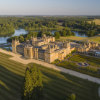
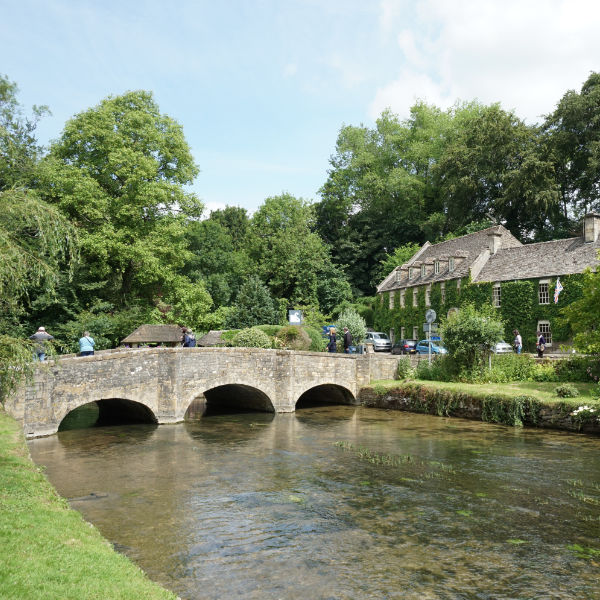
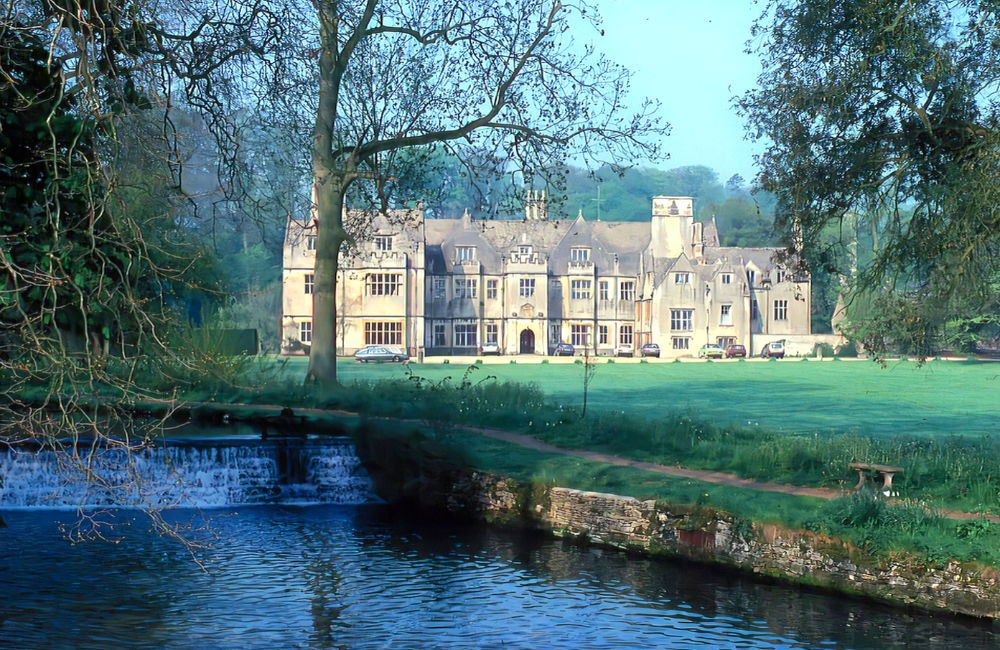
So, after picking up a rental car at the Mildenhall Air Base and spending three wonderful days in London, we headed out on the 80 miles or so drive to Bibury. I had always loved the beauty of the British countryside, but I was overwhelmed by the Cotswolds - the country lanes, the stone fences, the bucolic rolling fields full of sheep, the slow moving, clear streams, the slate-roofed, honey-colored houses. But even this did not prepare me for the stunning scene of the old mansion, Bibury Court. The huge stone pile was nestled on the bank of the Coln river, with water so clear you could see trout lazily cruising for their next meal while majestic swans glided noiselessly on the surface.
Our stay at Bibury Court
When we checked in in May 1982, we took the Sackville Suite, a large accommodation consisting of a bedroom, sitting room, dining area, and large bathroom. It overlooked the river side of the house and the huge front lawn area.
The real charm of the stay though was in the reception and dining rooms on the main floor. The evening began in a cozy paneled bar area where Andrew, the then proprietor, served drinks and hors d'oeuvres while we perused the hand-written menu. When our meal was ready, we were called to our table by a server and the multi-course meal began. Following the main course, we were invited to the large, paneled drawing room where deserts and coffee were served by the blazing fireplace.
One of the things Andrew offered was a chance to use one of the hotel's rods try one's luck at catching some of the brown trout in the Coln, which the chef would cook for you if you were successful.
The Mansion history
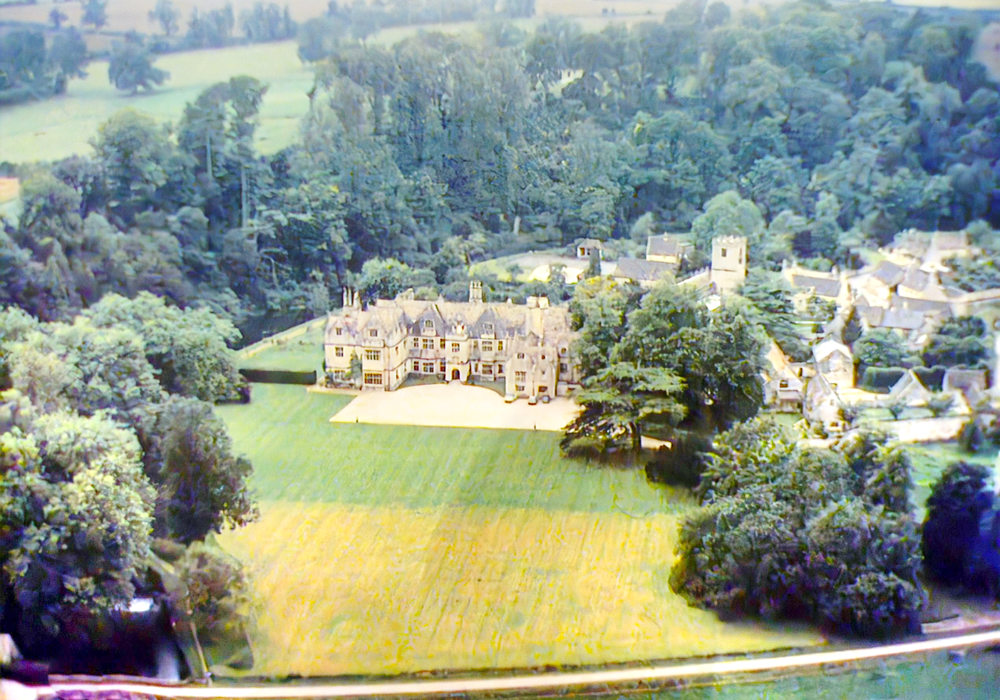
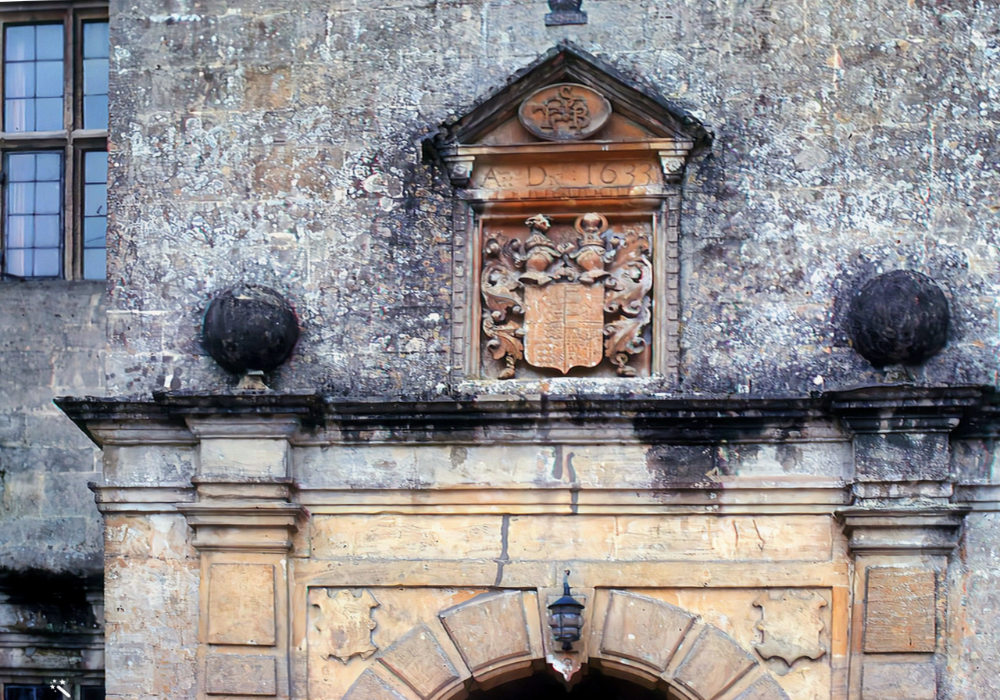
Bibury Court is a Jacobean mansion, built on the site of a former Benedictine monastery. It dates from the late 16th Century, and was extended in 1633 by Sir Thomas Sackville, the illegitimate son of the 1st Earl of Dorset who was "Knight and gentleman-usher in dailie waiting on the King" (James I). Above the entry door still stands the Sackville coat of arms and the year of the manor's refurbishment, 1633.
Charles II is reputed to have visited the Court when he attended Bibury Races, as did the Prince Regent during the reign of George III.
The house remained in the Sackville family for several generations and through the female line passed to the Cresswells. The interior was remodeled for Estcourt Cresswell in 1759. The Rev. Sackville Cresswell sold the house between 1826 and 1829 to the Rt. Hon. Lord Sherborne.
By the turn of the century the building had started to fall into disrepair. In 1926 a refurbishment program began for the latest owners, the Clarke family, who had bought the estate the year before. Sir Orme Bigland Clarke (b. 1880) was married to Elfrida Roosevelt, and although the former died in 1949, the house remained in the family's ownership until 1968 when it was sold after the death of Lady Clarke. It was then bought by the Wynne-Jones family and turned into a hotel.

Bibury village
Bibury Court is situated on the edge of the village near St. Mary's, a Saxon church. The most popular tourist spot in the village is Arlington Row, a group of ancient cottages with steeply pitched roofs. These 17th century cottages, were converted from an original hall, used to store wool, into weavers' homes. Just opposite is a water meadow called Rack Isle, a protected wildfowl breeding ground. Awkward Hill rises behind Arlington Row. It, too, is covered with cottages in the warm Cotswold stone. The famous Bibury trout farm is also located nearby.

The Romans loved the Cotswolds too
Nearby Bibury at Chedworth is one of the largest and most elaborate Roman villas so far discovered in Britain. The villa was built in phases from the early 2nd century to the 5th century. The building included a heated and furnished west wing containing a dining-room with a fine mosaic floor.

On our way down a narrow lane to visit the Roman villa, our car was stopped by a rustic gentleman in a tweed coat and Wellington boots. As we waited, a line of similarly attired men came across our path, flushing a flurry of game birds before them into the path of a line of shooters behind a stately home on the other side of the lane. Had we not been in a modern auto I would have sworn that we had stumbled into a time warp of a 19th century country house shoot.
Memories last forever
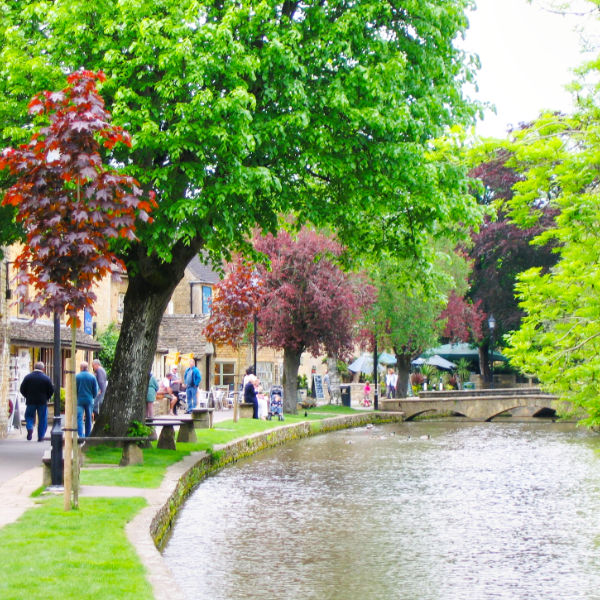
The 10 days we spent in Bibury were a lucky serendipitous find that ended up bringing us back to the Cotswolds again and again, allowing us to broaden our experience to include much more of what this most beautiful region offers - Broadway, Bourton-on-the-Water, Chipping Campden, the Slaughters etc.
Sadly, Bibury Court today has returned to private ownership and is not available for holiday rentals but the options for similar enjoyment of the beautiful Cotswolds are even more manifest today than in 1982.
Just get up and go. Sometimes the best of times come from making up your plans as you go.
Last updated: 23 August 2023 - Please note: This blog was first written over a year old and things may have changed since the blog was written.