Stanton to Stanway
You are here: Home > Cotswold Blog > Stanton to Stanway
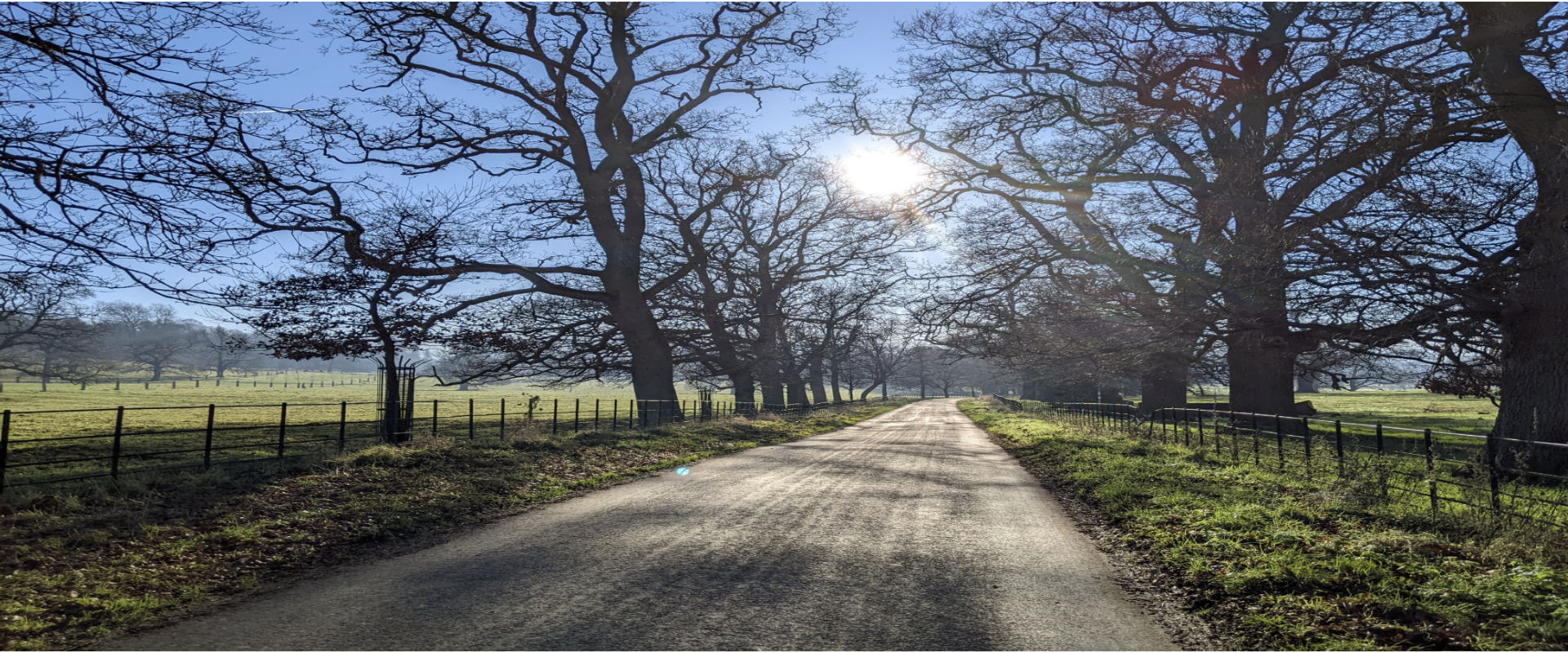
We wanted a nice easy winter walk to blow away the cobwebs and this one was just right.
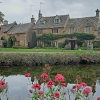
Stanton and Stanway are perfect examples of timeless Cotswolds beauty and the walk is straight and generally level.

Stanton
There is a small free public car park in Stanton by the village hall and the village of Stanton is just close by.
Built at the base of Shenberrow Hill, Stanton is mentioned in the Domesday Book as part of the lands of Winchcombe Abbey. In 1749, Robert Kirkham became Rector of Stanton and, through him, his friends Charles and John Wesley became frequent visitors to the village. Together they were influential in the beginnings of the Methodist movement.
In 1906, the greater part of the village was bought by Philip Stott, a famous engineer and architect, who spent the rest of his life upgrading and improving the village, building a reservoir, adding street lighting, extending the school and providing a swimming pool and cricket pitch amongst other things.
Another interesting fact is that a significant amount of the grain used in Warburtons bread is grown in the fields around Stanton.
At the top of the High Street is the village pub, the Mount (https://www.themountinn.co.uk/), Built in the 17th century, it's been a farmhouse, a cobbler's shop, a tea room then an off-license. Now it's a popular pub with panoramic views across the Vale of Evesham towards the Malverns and sometimes even the Black Mountains in Wales.

St Michael's Church
St Michael's Church is Grade 1 listed and built in the early 9th century when it was part of Winchcombe Abbey.

The Guildhouse
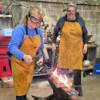
On the slope of Shenberrow Hill, overlooking the village, is the Guildhouse. It was founded by Mary Osborn, inspired by Mahatma Gandhi, who she met whilst working in the East End of London in the 1930s. She made it a retreat from the world dedicated to the teaching of traditional crafts. It opened in 1973, built by volunteers and local people from local materials. It still runs traditional craft courses but now also provides residential breaks, away days and training facilities for social entrepreneurs.
The road to Stanway takes us back out of the village and straight on. The turning is signposted after about three quarters of a mile.

Stanway
In medieval times, Stanway was owned by the Abbey of Tewkesbury. It was recorded in 1291 as having three corn mills and a fulling mill (for processing wool), as the Abbey kept large flocks of sheep. The fulling mill still remains, just past the church and manor, though in the late 17th century it was converted to a corn mill. It was renovated in 2002 and is now a flour mill. It's open to the public on designated days when you can watch the whole process take place and buy the bags of flour produced.
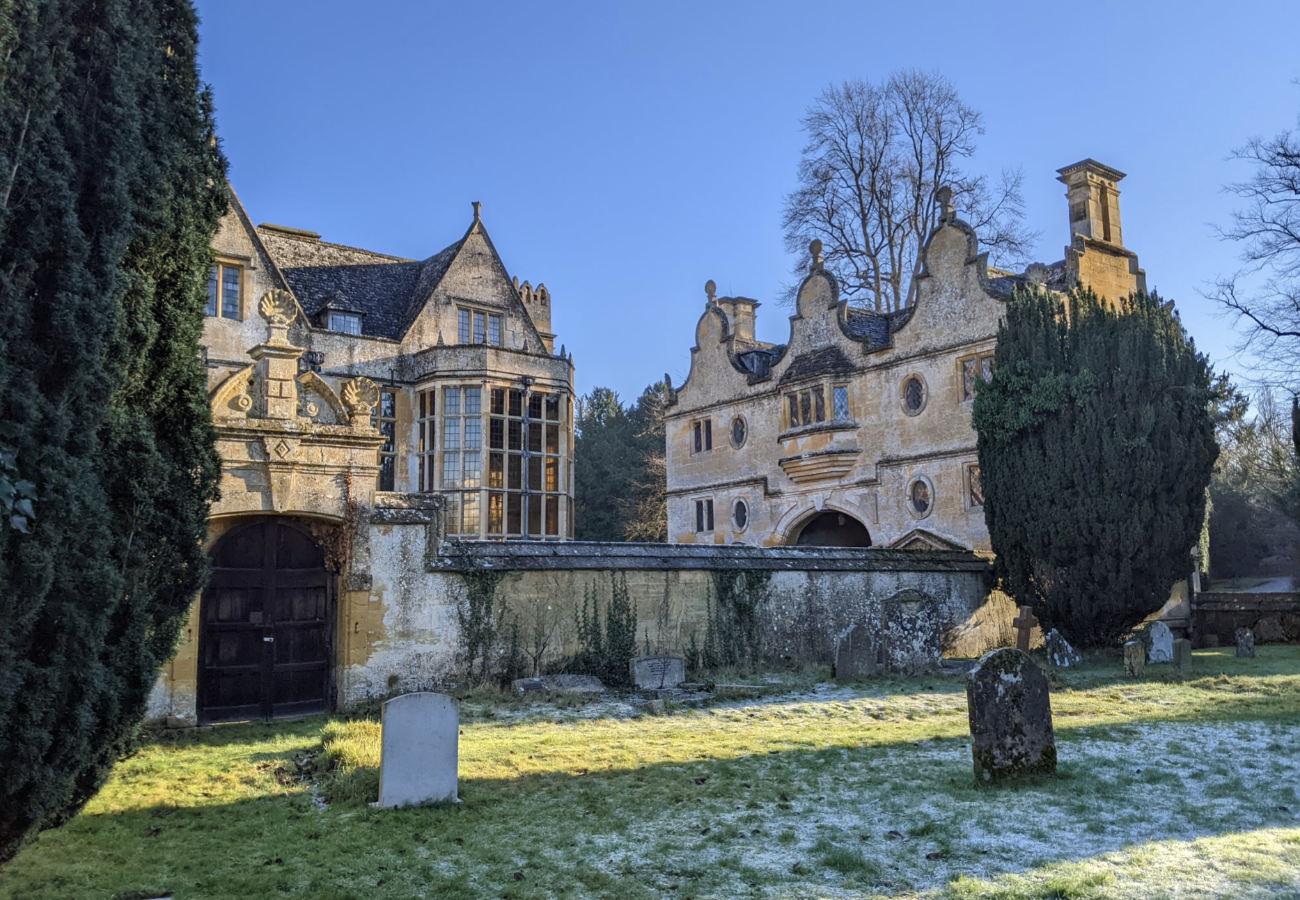
Stanway House
Nestled in next to the church is Stanway House, a typical Cotswold Jacobean manor house. It's Grade 1 listed and has been lived in continuously since the 16th century.
The Water Garden of Stanway House is one of the finest in England and was created in the 1720s. In 2004, the fountain was added and, at 300 feet, is one of the tallest gravity fed fountains in the world.

J M Barrie was a frequent visitor to the house in the 1920s and over the years the manor house has had many media appearances - Jeeves and Wooster, Vanity Fair (2004), Emma (1996), Wolf Hall (2015) and several other productions have all featured the building.
The house and grounds are usually open to the public on a limited number of days in the summer.
All in all, this is a great walk, with very little traffic and very nice countryside views.
Sue McGreal
Photos ©2022 Sue McGreal
Last updated: 23 August 2023 - Please note: This blog was first written over a year old and things may have changed since the blog was written.