Walking the Thames Path - Part 2 - By Phil Dark
You are here: Home > Cotswold Blog > Walking the Thames Path - Part 2 - By Phil Dark
In Part 1 of this series, Walking the Thames Path, I described my walk along parts of the Stroud Navigation and Thames & Severn canals, en-route to finding the source of the River Thames. I featured the navigable parts of the canals that had been restored. This blog provides more details about my observations during my walk, the history of the abandonment of the canals and the plans to restore them.
My observations
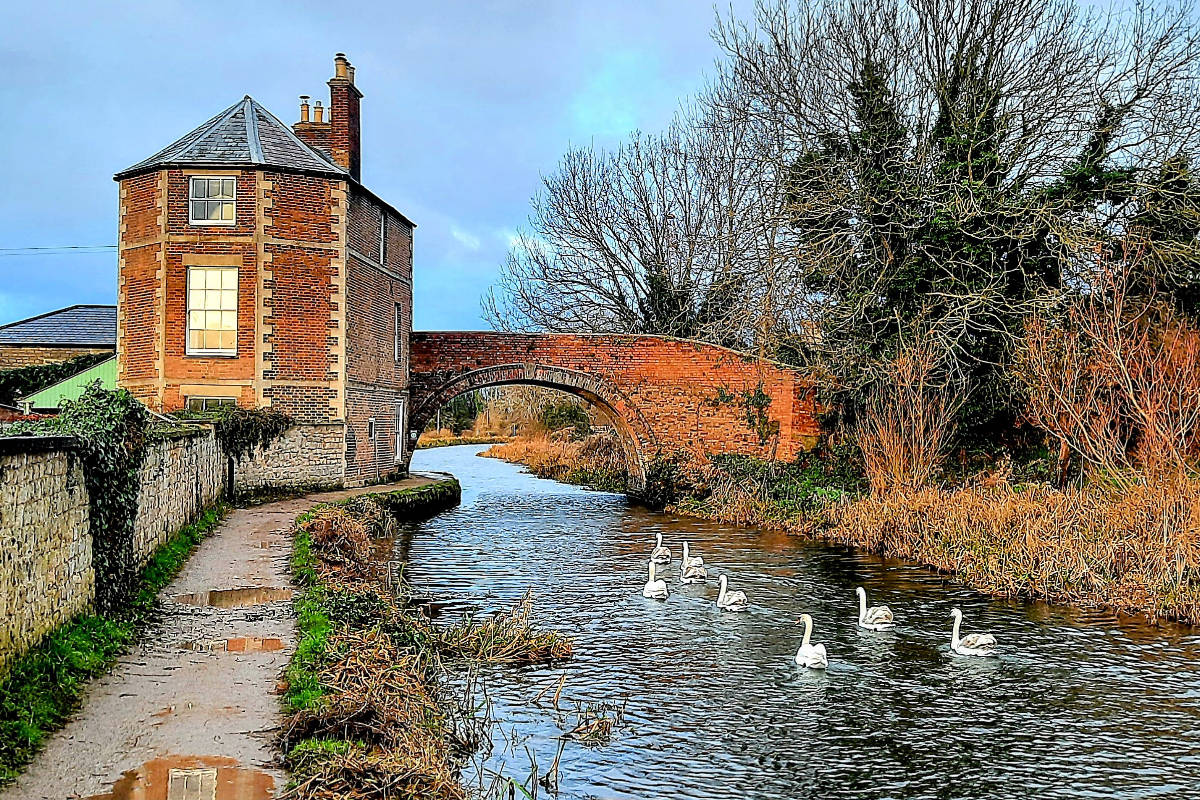
Thames & Severn Canal from Brimscombe eastwards - I first saw the signs of abandonment of the Thames & Severn Canal shortly before Brimscombe, where reeds suddenly grow across its width. My immediate thought was how beautiful but also so sad. Continuing East on the tow path the canal bed becomes dry/reeded or partly watered, and disused locks are visible. The vivid autumn colours set against the red brick, brightened the view of years of dilapidation. Running along the magical Golden Valley through Chalford and Frampton Mansell towards Sapperton the canal reaches the 2.2-mile long Sapperton Tunnel at the Daneway Portal.
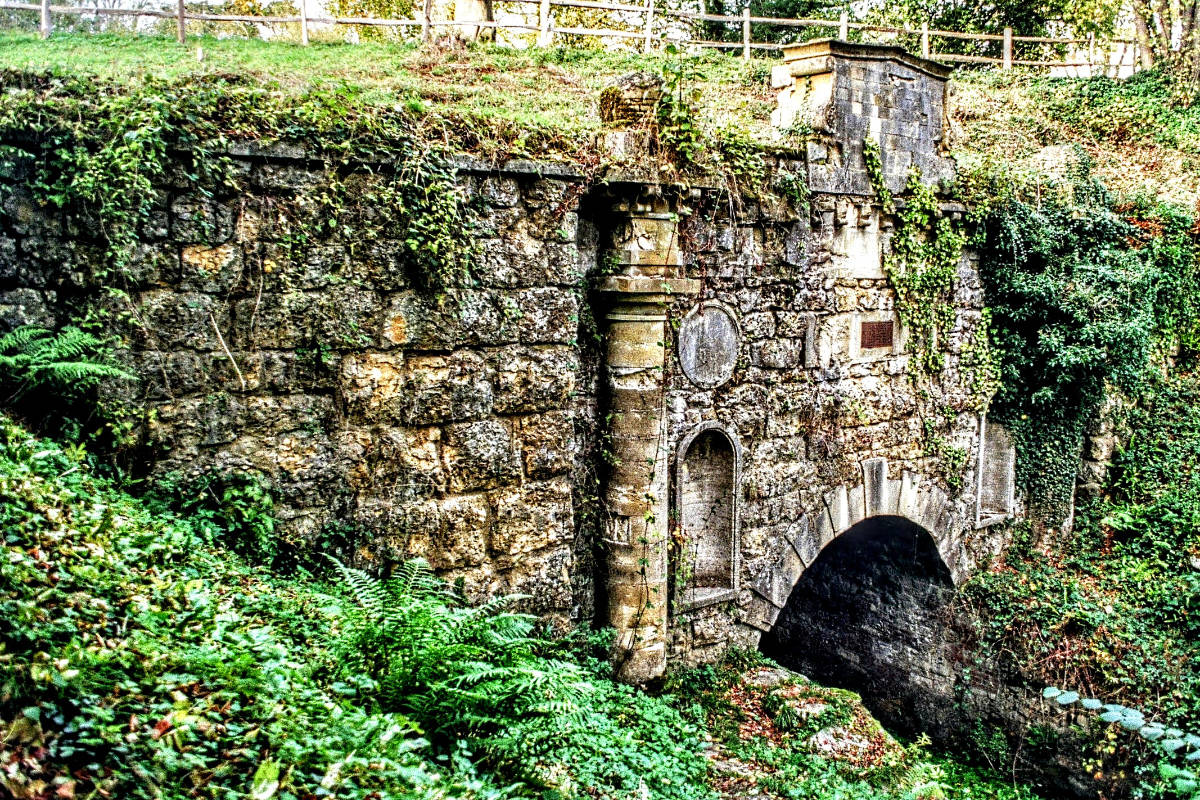
Pictured above is the tunnel exits at the Coates Portal south of Sapperton, where the incredibly ornate wall has a Grade II* listed rating. Here the tow path resumes until the canal separates from around Trewsbury/Coatefield Bridge. The canal then heads east, though is sadly inaccessible as it passes between Coats and Ewen. So, the Thames & Severn Walkway becomes the route, towards the Thames Path, and onto the Saxon Town of Cricklade.
East of Ewen, the canal can be accessed at Siddington, where an abandoned basin and double lock creates an almost dystopian landscape. I made a separate trip to walk this stretch which contains towering bullrushes and majestic trees that have grown out of the canal bed. It runs east through the northern part of Cotswolds Water Park, Cerney Wick, onto Latten/Eisey near Cricklade.
From Eisey the rest of the canal cannot be walked, so the route is to the south along the Thames Path. This runs from Cricklade though to the canals junction with the River Thames at Inglesham Lock. Here a timeless view of a cottage and roundhouse (as described later) can be seen from the opposite bank, as can the entrance to the lock pound.
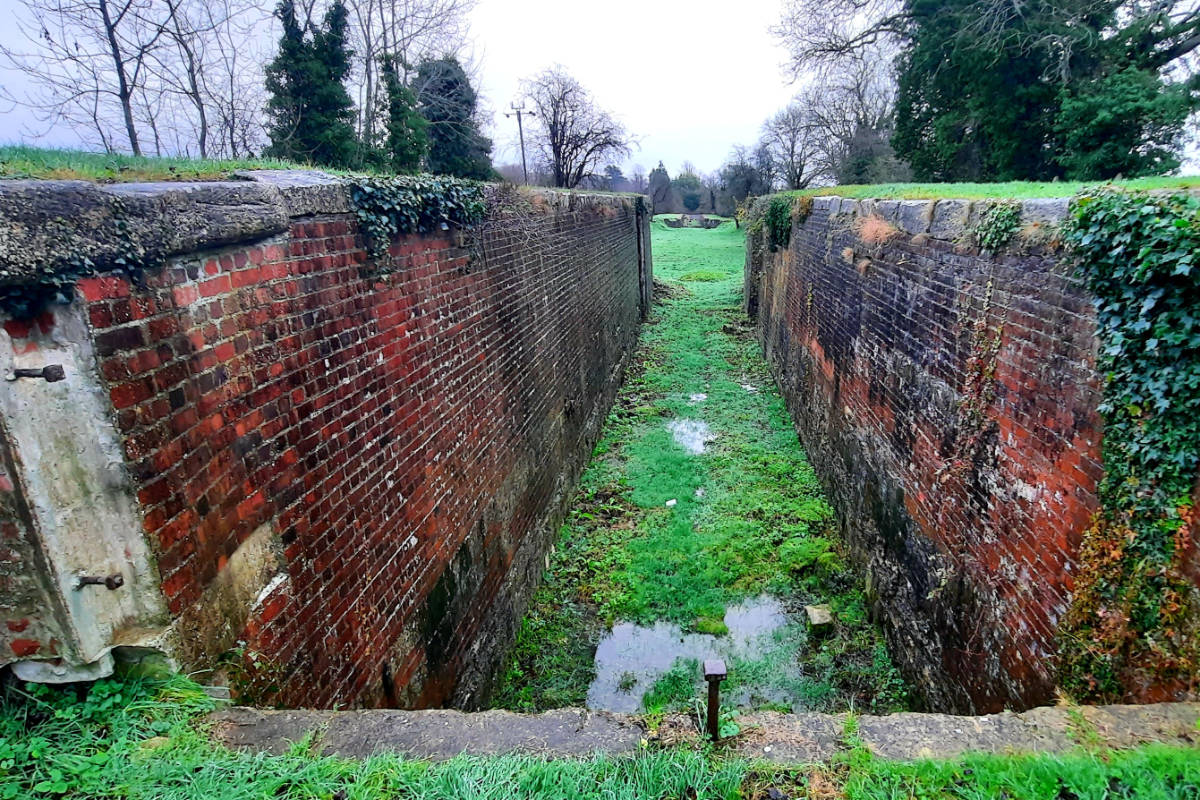
Stroud Navigation Westwards - Since writing my last blog, I have walked the western section of the Stroudwater Navigation from Stonehouse. I was privileged to see the Railway Bridge at an area known as 'The Ocean' under construction, with large concrete sections being craned into place. And passed Bonds Mill, another part of the valleys textile and wool heritage. The canal becomes dry/reeded or infilled after Pike Bridge, Eastington, and is then infilled due to the M5 Motorway construction. This is known as the missing mile.
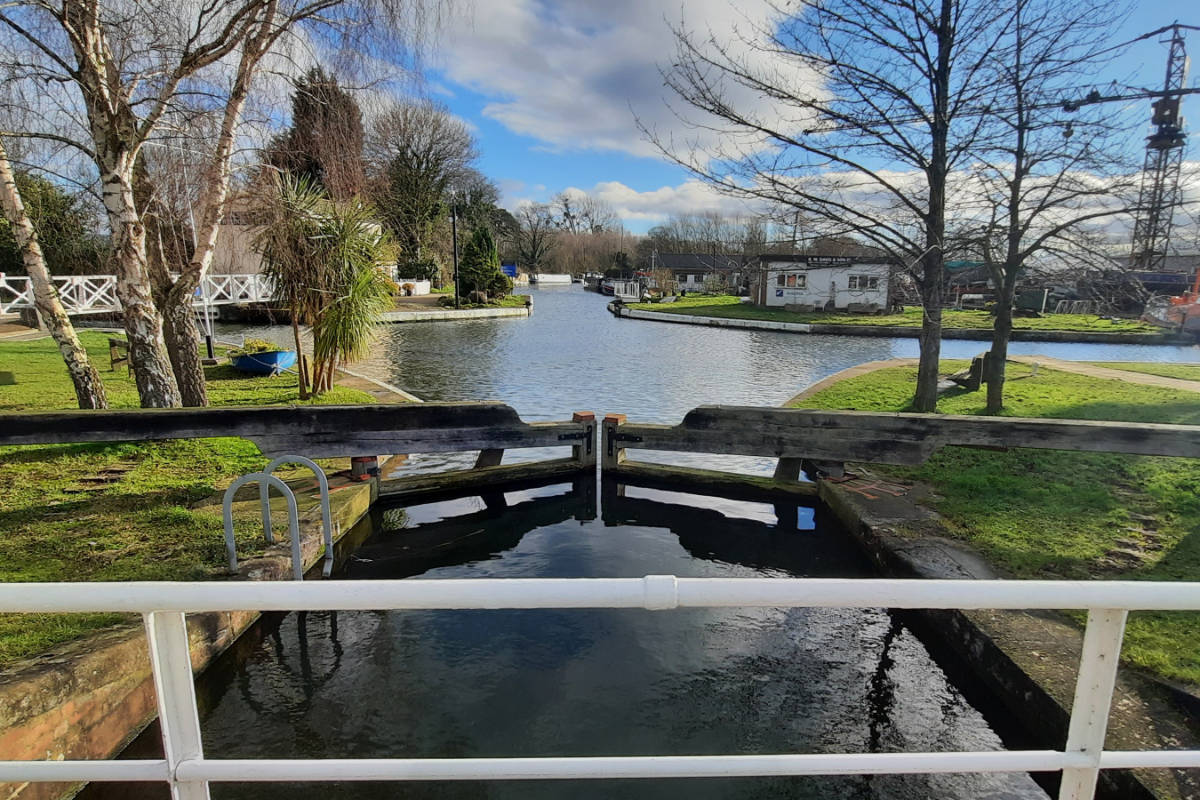
Next is a short new section under the A38, not fully connected yet to an adjacent in-water stretch near Whitminster. After more infill, there is a short section for boat moorings before Saul Junction, the one-way connection with the Gloucester and Sharpness Canal. Finally, at the end of the canal where it meets the River Severn at Framilode, is a short section in-water, that is beautifully reeded habitat for moorhens.
History of Thames and Severn canal
As built, the Thames & Severn canal was over 28 miles long with 44 locks, costing £250,000. A branch to Cirencester added a further 1.5 miles. The first 2.5 miles from Wallbridge to Brimscombe Port had larger locks to allow Severn trows to use it. The summit is 362 feet above sea level and 8.1 miles long and includes the Sapperton Tunnel. This tunnel was key to the success of the canal and runs under Sapperton Hill.
The canal opened in stages as the tunnel was built:
- 1785 - 4 miles from Wallbridge to Chalford
- Mid-1786 - 7.5 miles onto the Daneway Portal
- Spring 1789 - Sapperton Tunnel was completed
- November 1789 - The section to the junction with the River Thames at Inglesham, which descends through 16 locks was fully open
At the time of construction Sapperton Tunnel was the longest in Britain. It took 5 years to complete with 25 shafts dug along it to provide access. Difficulties were encountered during construction, due to different ground conditions. Cotswold limestone (Great Olite) has water permeable fissures which led to rock falls and formation of springs. Where the tunnel went through Fuller's Earth clay it had to be lined with brick, though expansion of the clay could lead to roof falls, or raise the base of the tunnel.
It is interesting to note that the tunnel had no tow path, so boats had to be propelled by legging - two people pushing it along using their feet against the tunnel wall! As the Stroud Navigation had been completed 10 years earlier, the desired link between the River Severn in the west and the River Thames in the east, was made.
Water supply and loss
Assumptions about the water supply from the Rivers Frome, Churn and Colne, together with the springs at Thames Head and Boxwell, turned out to be overestimated. In addition, major improvements were required to address water loss through leaks along the summit pound, caused by:
- The underlying rock being porous limestone
- Seasonal springs breaking through the canals clay lining, which allowed water to leak when the springs ran dry.
Measures taken to resolve this included:
- Extension of wells at Thames Head with installation of a Boulton & Watt steam engine, and at one point a windmill, to pump water to the canal
- Shortening the length of locks so less water flowed downstream when used
- An extra, shallow lock was built at Boxwell
- The canal bed was lined with concrete immediately east of Sapperton Tunnel

Closure and abandonment
The river navigations at either end of the canals were not satisfactory. To the east the depth and condition of the River Thames restricted navigability, and proposals for two canals to run to deeper waters further east did not materialise. Some improvements were made to the river after 1786, and from 1810 the Wilts and Berks Canal provided a link to Abingdon. But that year the Kennet and Avon Canal opened, and as a much shorter route became preferred by the Bristol to London trade. In the west, the situation with connection to the tidal River Severn was not remedied until 1820, with the construction of the Gloucester and Sharpness Canal.
Railway competition began from 1836, with the development of the Cheltenham and Great Western Railway line. The canal company received compensation of £7,500 and benefitted from higher initial rail tolls (in place to recover construction costs). However, the construction of a new railway tunnel at Sapperton in 1845, led to a 74% fall in canal revenue, despite the tolls being cut.
From 1855 financial difficulties of the commissioners led to restriction in the navigability of the River Thames. It was not until 1866 that a replacement proprietor, the Thames Conservancy, improved the situation. However, decline in the canal continued with the Chalford to Inglesham section closing in 1893. An attempt via. a new Trust was made to reopen the canal in 1899, but lack of water on the summit meant it was soon closed. Gloucestershire County took ownership in 1901, and the canal was finally closed and abandoned from Chalford to Inglesham in 1927. The Stroudwater Navigation governors managed to keep the remaining section through Brimscombe up to Wallbridge Lock open until 1933, when that too was abandoned.
Inception of canal restoration
A 1972 book entitled Lost Canals of England and Wales by Ronald Russell, led to a number of canal restoration schemes. This included the formation of what is now the Cotswolds Canals Trust, who along with Volunteers have worked to restore both canals.
In 2001 the Cotswold Canals Partnership was established with representation from British Waterways, the Proprietors of the Stroudwater Navigation, the Cotswold Canals Trust, councils at district and county level, and other parties. A year later the Vision for Strategic Enhancement of Britain's Inland Navigation Network, prioritised its restoration. The cost estimated for the project was £82 million.
A bid was made to the Heritage Lottery Fund, though had to be resubmitted, split into smaller phase projects. In 2006 £11.3 million was awarded, later increased to £11.9m Despite the restoration commencing, British Waterways withdrew from the partnership in 2008 because of financial difficulties. Stroud District Council became project leader, and a new body, the Stroud Valleys Canal Company, was created to hold and maintain the assets of the Thames & Severn Waterway. They currently hold most of the stretch between Wallbridge and Brimscombe.
Progress of canal restoration
The Restoration Programme is divided into several key phases.
Phase 1a - Stonehouse to Brimscombe Port - 6 miles, 10 locks
My previous blog explained that £11.9 million was awarded to enable the restoration of the two canals between Stonehouse and Brimscombe Port. This was supplemented by:
- £2.9million from the European Inter-Regional budget
- £6million from the South West of England Regional Development Agency
- Volunteers contributed greatly to work up to Hope Mill Lock, and the restoration of Griffin's Mill Lock
Despite this a shortfall in funds to restore Brimscombe Port became apparent. Stroud District Council secured further £2million funding from Homes England in 2015, plus around £750k from the One Public Estate Land Release Fund. The council also pledged £2million, obtaining planning consent in March 2021. They are now seeking a development partner.
Phase 1b Stonehouse to Saul Junction - 4 miles, 8 locks
Known as the Cotswold Canals Connected project this part of the Stroud Navigation will connect the completed Phase 1a section, westwards, to the Gloucester and Sharpness Canal at Saul Junction. It is expected to be completed by late 2023.
There are significant engineering challenges. A new railway bridge is required at what is known as 'The Ocean' near Stonehouse, where the canal passes through a culvert. The original route has been divided by the M5 motorway and A38 trunk road, a mile being infilled during construction. (the missing mile). Parts of the River Frome diverted to use the old canal bed also need re-establishing.
After 2 failed Heritage Lottery Funding bids pre-2015, a revised bid resulted in an award of £9.7 million in 2017. This was backed with:
- £3million from Stroud District Council
- £700,000 from Gloucestershire County Council
- £675,000 from the Canal and River Trust, who also pledged practical support
- The Cotswold Canals Trust offered financial assistance and volunteer labour
- £4million from Highways England in May 2019, to cover the cost of tunnelling under the A38 roundabout, (now complete) and replacing the 'missing mile'
Phase 2 - Gateway Bridge to Inglesham - 10 miles
This covers work at the eastern end of the Thames & Severn canal, between Cotswold Water Park (Cerney Wick), and Inglesham Lock, the junction with the River Thames. This provides links with the North Wilts and the Wilts and Berks Canals.
In 2002 British Waterways bought the lock at Inglesham and the adjacent round house, to safeguard the route of the canal. The house now belongs to the Cotswold Canals Trust. Funding awarded by the Inland Waterway Association allowed Inglesham Lock to be restored by 2019.
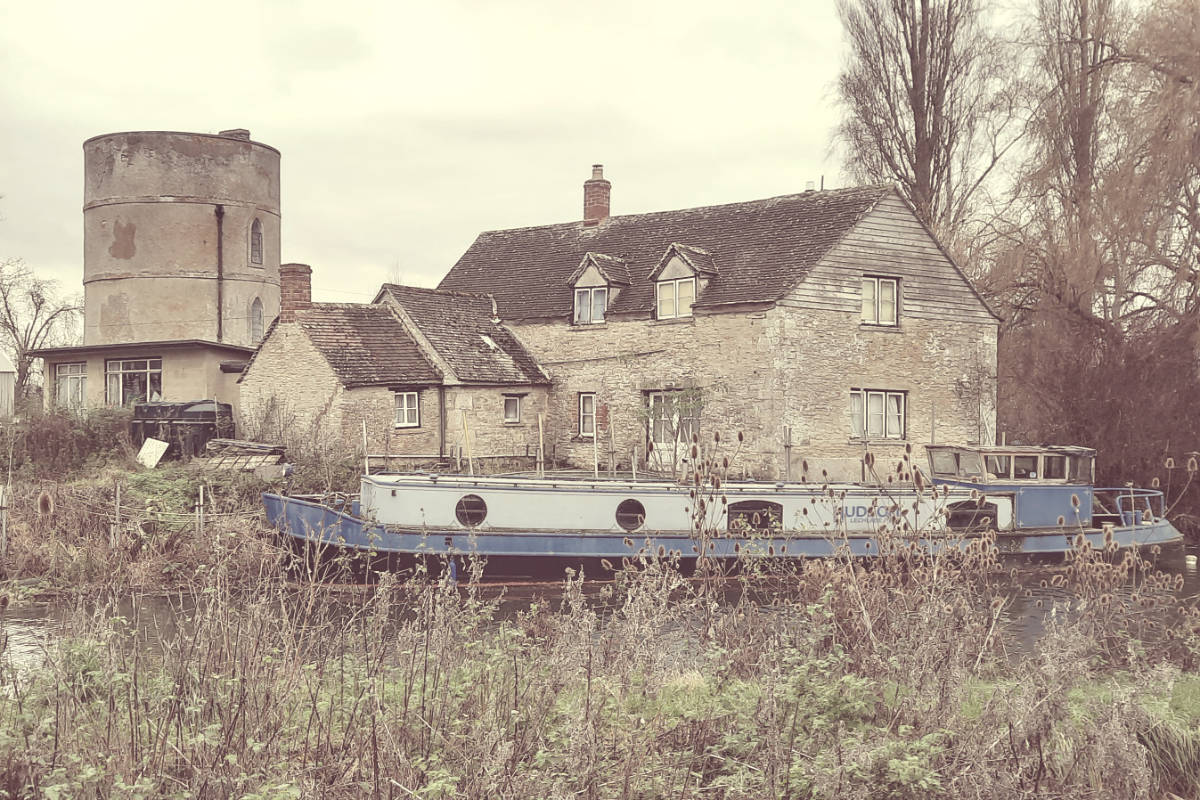
The section has land ownership rather than engineering challenges, with several miles of unfilled canals around Kempsford. Limited Funding has slowed restoration though some bridges and culverts have been built, several locks have been substantially restored, and some lengths of towpath reconstructed. Dredging is also complete.
Phase 3 - Brimscombe Port to Gateway Bridge - 16 miles, 31 locks
Also the Thames & Severn canal, this section presents major engineering challenges, with the water supply, and rock falls within the Sapperton Tunnel to address, and bridges and an Aqueduct to be built. Plus 31 locks to restore, some of which have been completed. As of May 2015, there was no significant funding in place for any restoration projects on this section of the canal. However, some locks and bridges have had restoration work, and towpath improvements are ongoing.

Roundhouses
A feature along the canal is 5 round houses.
Now listed buildings these 3 storey circular cottages were designed with a store on the lower floor, external steps up to a living and kitchen area, then internal stairs to the top floor.
They are situated at Inglesham at the junction with the River Thames, Marston Meysey, Cerney Wick near Latton, Coates and Chalford.
The future
What started as an idea to walk between Two National Trails has become an enlightening and educational experience. I have learned, and been able to share:
- the history of the wool and textile industry along the Stroud Valleys
- the associated mills collectively known as the "string of pearls"
- the history behind, and plans to complete restoration of, the Cotswolds Canals
- the source of the River Thames
I will continue to walk the Thames Path, which means completing a west to east coast trek of the UK.
I also plan to walk between the Thames Path and the King Offas Dyke National Trail, which runs along the English and Welsh Border. Taking the Wysis Way from Sapperton, I will pass through the Cotswolds and Forest of Dean to Monmouth and the River Wye.
Last updated: 23 August 2023 - Please note: This blog was first written over a year old and things may have changed since the blog was written.