Walking the Thames Path
You are here: Home > Cotswold Blog > Walking the Thames Path
Having walked my first National Trail, the Cotswold Way, I decided to walk the Thames Path next. Since this starts near the Cotswold Area of Natural Beauty boundary at Kemble, I thought it would be interesting to walk to it from the Cotswold Way first.
The Thames & Severn Walkway
The Thames & Severn Walkway, from the Cotswold Way at King's Stanley near Stroud, was my preferred route. This had the attraction of:
- Walking along the River Frome, Stroudwater Navigation and Thames & Severn Canals
- Passing the 'string of pearls' - historic mills, connected to the wool and textile industry
- Learning about the Marling family, and Marling & Evans influence on local mills.
Since the Thames and Severn Canal ends further east at Inglesham lock, near Lechlade-on-Thames, and runs through Cotswold Water Park, I made that an extended part of my journey.
So over five weekends I completed a 110-mile return walk from King's Stanley, to the start of the Thames River & Thames Path at Kemble. Then east to Cricklade, back west to Siddington, and east again to Lechlade-on-Thames (on the Gloucestershire/Wiltshire/Oxfordshire border).
This blog focuses on my first two weekends walking between the National Trails and the history of various mills along the Canals. I will write a separate blog with more detail about the Thames & Severn Canal and my walk beyond Kemble.
The Canals
The Stroudwater Navigation canal was unofficially started in 1730, and formally authorised in 1776. It was built to link Stroud to the River Severn, and completed and opened in 1779. Within its 8-mile length there are 12 locks, with a rise of 102ft 5in (31.22m). With coal its main cargo, it became a commercial success, and the joining of the Thames & Severn Canal in 1789, gave a complete route from Bristol to London. However, its trade and use declined with the opening the Kennet and Avon Canal from 1810, and increasing competition from the railways. It stopped making profit in 1922, was eventually abandoned in 1954 and has been partly infilled.
The Cotswold Canals Trust began a project in 1972 to restore both the Stroudwater Navigation and the Thames and Severn canal. This accelerated in 2003, with £11.9 million Heritage Lottery Funding, matched by the Trust for restoration of the Stroudwater Navigation and the Severn and Thames Canal from Wallbridge to Brimscombe Port. This was phase 1a of the £82million bid to restore both canals to their original route.
(https://en.wikipedia.org/wiki/Stroudwater Navigation)
The Mills
There is some evidence of mills in the area in the 1086 Domesday book, though records become more frequent from the late 1200s. These mills were powered by the waters of the River Frome, some like Capel Mill (remains pictured below), long demolished.

visitthecotswolds.org.uk provides information on the history of mills in the Stroud and Nailsworth Valley. Here are some extracts inc. by Historian Paul Hawkins Fisher.
the most impressive legacy is the 'string of pearls' - the collective name for the fine line of mills - which once roared with the deafening sound of fulling stocks and water wheels.
Near it begin those tortuous, gorge-like valleys; each of which, as it winds upward into the mass of the hills, breaks into numerous smaller lateral valleys and into combs, dens, and glens, having their own local names and peculiarities, and all being beautiful exceedingly.

I feature some Mills later, others highlighted by Visit the Cotswolds include:
- Ebley Corn Mill (The Snow Mill) - formerly an oil and then cloth mill, it now makes more than 160 types of snowflakes for top international films.
- Lodgemore Mills - despite earlier mills being destroyed by fire, the rebuilt premises are still making cloth, including finishing and dying the covering for tennis balls used at championships such as Wimbledon
- St Mary's Mill* - this features a non-working large mid 1800s waterwheel and early 20th century Tangye steam engine.
- Stanley Mill* - this is of 'outstanding national importance' as the only local early fireproof mill. With an interior constructed to a most individual design it is a grade 1 listed building. It still contains some carding and spinning machinery that was working when it closed due to the collapse of the owners Marling & Evan in 1990.
* The Stroudwater Textile Trust publishes a programme of summer mill visits. The programme is also available as a leaflet from Stroud Tourist Information Office.

My Journey
Ryeford Bridge
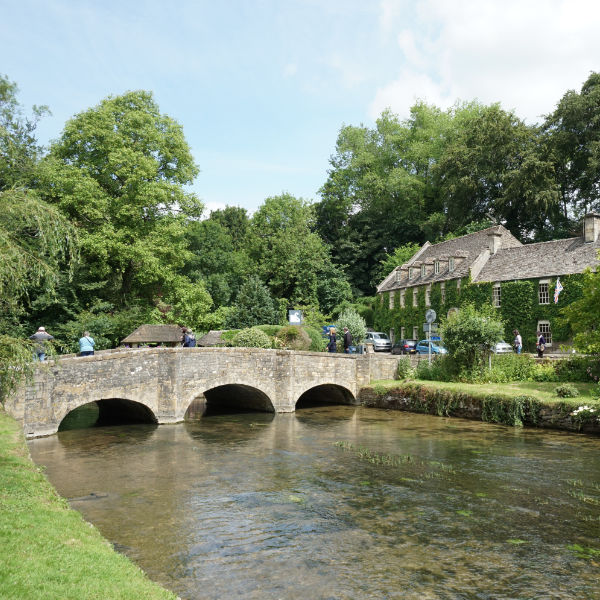
My journey started at King's Stanley west of Stroud. Walking past Stanley Mill you arrive at Ryeford Bridge. (pictured earlier). Here the Stroudwater Navigation towpath is accessed from the Cotswold Way. The presence of a crossing over the River Frome here dates to 1340, and a mill was built in 1500. A stone bridge was built in 1727, and a brick structure added when the Stroudwater Canal was built in 1770. In 1883 the bridge was replaced as it had become unsafe. East of the mill is a double lock with an adjoining house for the lock keeper built in 1784
https://www.british-history.ac.uk/vch/glos/vol10/pp267-273

Ebley Mill
It's reported there has been a mill at Ebley since 1393. The Long Block of Ebley Mill was built in c1820 by the Clissold Family to manufacture woollen cloth, and was sold to the London textile firm Evans, Robson & Severs around 1825. S.S Marling was a partner, and this brought the Marling family to Stroud, with the firm later becoming Marling and Evans.
A new front section to the mill was built after 1959, the previous being destroyed by fire. This was designed by G.F Bodey, later earning it a Grade II* listed building rating. Ebley Mill was the largest in the Stroud valley, by 1870 employing some 800 workers. It was used for printing after the second world war, and is now the headquarters of Stroud District Council, after an £11m conversion. https://www.digitalstroud.co.uk/landmarks-ebley-mill

Capel Viaduct and former mill
A railway viaduct, built in 1868 for the Great Western Railway (NMR number 1361033, LINEAR946) to replace an earlier viaduct of timber built in 1840. Capel Mill previously stood on the site. The entire viaduct is made up of twenty-two spans in total, spanning the River Frome and the Thames and Severn Canal (NMR number 970386, LINEAR99). https://www.heritagegateway.org.uk/Gateway/Results_Single.aspx?uid=1470641&resourceID=19191

Port Mill, Brimscombe
This grade II listed mill takes its name from the historic port, a 700 ft (213m) long canal basin now infilled. The port, dating to the 1780's, was the headquarters of the Thames & Severn Canal Company, who acquired Port Mill. In 1804, it was a grist mill, and 11 years later it was sold to the Lewis family of Brimscombe Mill.
By the mid-19th century, it was producing cloth, changing owners to James Ferrabee, and then the Marling & Evans Group, between 1863 and 1872. It remained in cloth production until the 1930s. Bensons International Systems Ltd, then made loose-leaf ledger equipment, building a large new factory in 1970 while retaining to the east is a small 18th century two-storey salt store. The mill is known for its central water tower, most of the redeveloped port site is now owned by Stroud District Council. https://www.digitalstroud.co.uk/landmarks-brimscombe-port-mill
Brimscombe to Sapperton
From Brimscombe the towpath runs through Chalford and is joined by the Wysis Way as it enters ancient Siccaridge Wood in Sapperton Valley. The towpath ends at Daneway as the canal enters Sapperton Tunnel, and the Wysis Way becomes the main route to the Thames Path.
Sapperton to the Thames
The Wysis Way passes alongside the Bathurst Estate (Cirencester Park) and through Haileys Wood, arriving at Thames Head between Coates and Kemble.
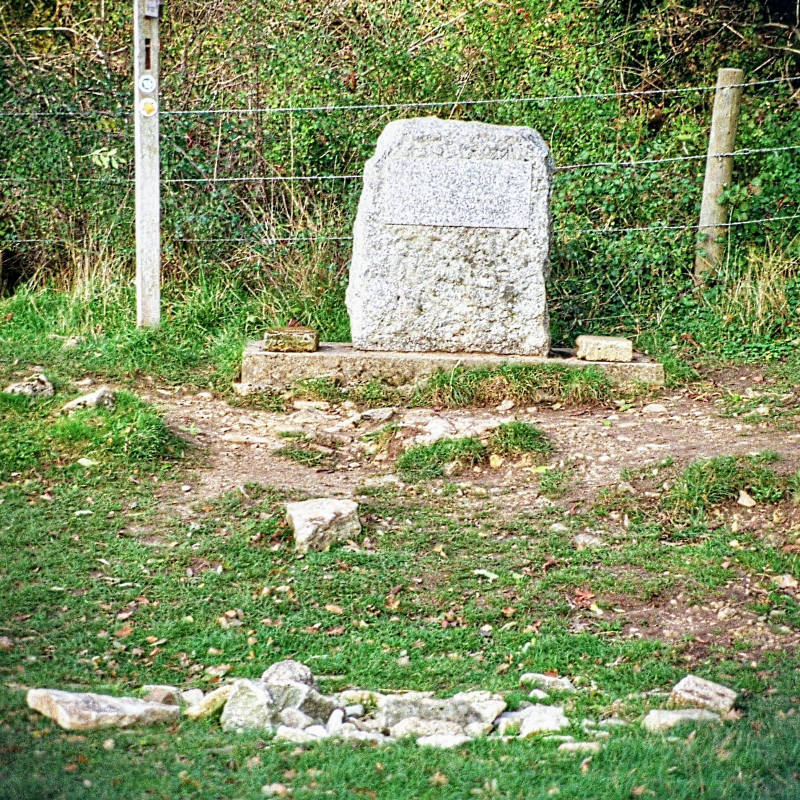
This is a group of seasonal springs that come from the limestone aquifers of the Cotswolds. One of these springs has a stone citing it as the official origin of the Thames.
This was dry on my visit, with the only active spring the permanent source further downstream.
Walking The Thames Path - Part 2
Part 2 of the blog is now live - Walking the Thames Path - Part 2
Last updated: 23 August 2023 - Please note: This blog was first written over a year old and things may have changed since the blog was written.